
Market Reactions to CapEx: How Investors Can Decode and Benefit from Capital Expenditure Signals
While CapEx reflects a company’s internal vision, its real impact is seen in the market’s reaction. A capital expenditure plan may signal expansion, efficiency, or long-term ambition — but the market doesn’t always cheer for it. In fact, CapEx can trigger either a rally or a selloff, depending on the context.
This blog covers how investors can interpret CapEx announcements, screen companies effectively, and align momentum with fundamentals for a smart investment strategy.
Companies Engaging in CapEx & Market Reaction
Not all CapEx announcements are treated the same by the market. Some are rewarded with optimism, while others invite skepticism — depending on timing, alignment with core operations, and market conditions. Let’s explore both sides of the reaction within the cement industry:
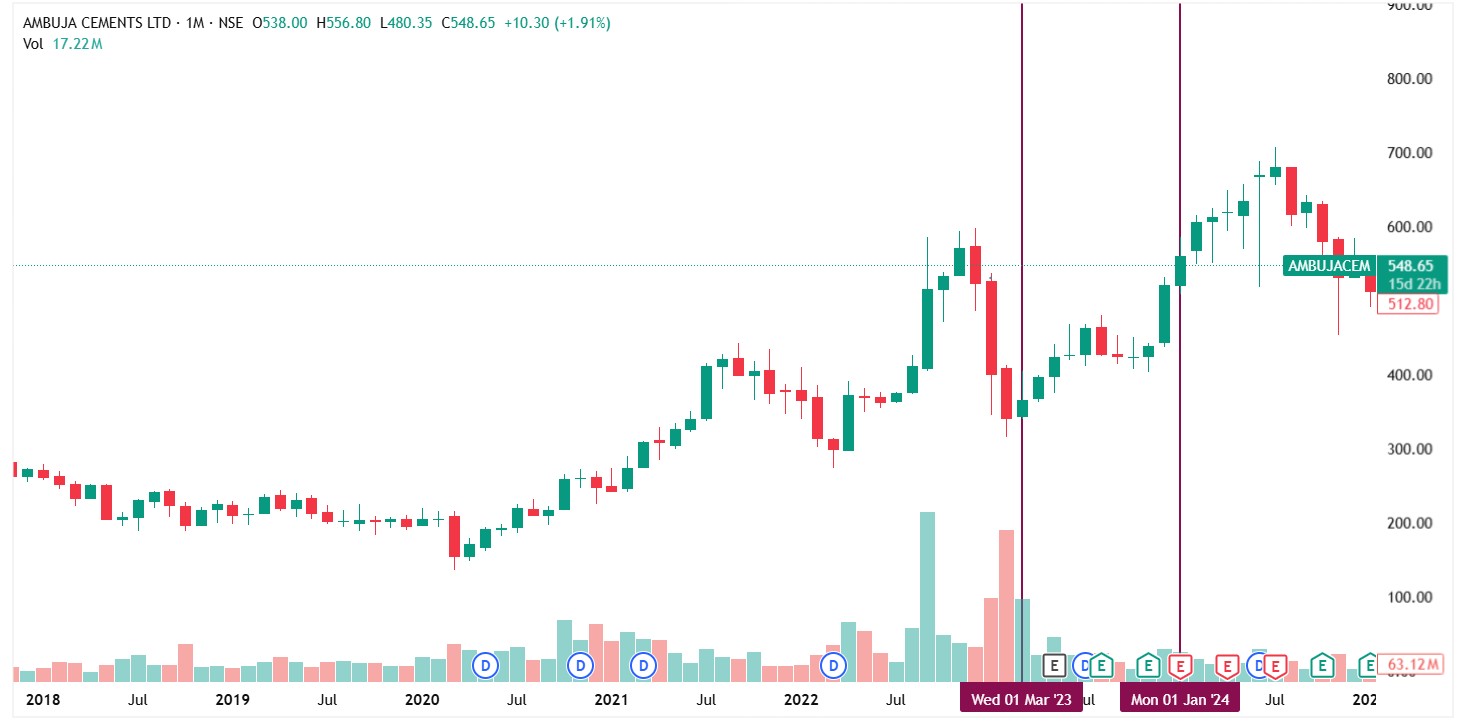
Positive Reaction: Ambuja Cements
In March 2023, Ambuja Cements announced a ₹3,500 crore CapEx to expand clinker production and boost operational efficiency. While the stock initially dipped 2-3% from ₹415 to ₹405 due to debt concerns, investor sentiment gradually turned positive. As the strategic intent became clearer and earnings improved, the stock climbed to ₹460 by September 2023, and peaked at ₹490 in January 2024 — marking a 20% gain from the initial decline.
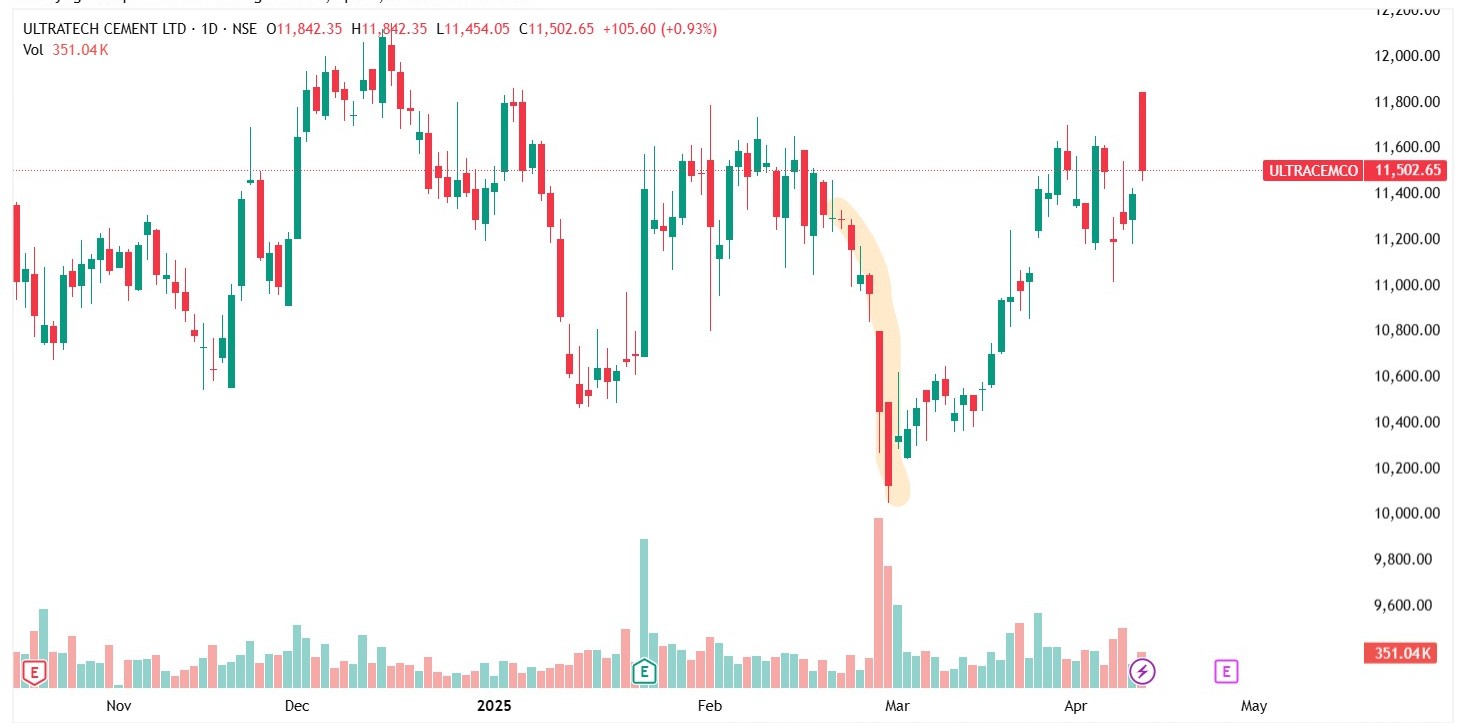
Negative Reaction: UltraTech Cement
In contrast, UltraTech Cement faced market backlash after announcing a CapEx into the wire and cable business, diverging from its core cement focus. The move raised red flags around strategic dilution and execution risk. The market reacted swiftly with a sharp decline in the stock price post-announcement.
This highlights how CapEx seen as unrelated, aggressive, or poorly timed — especially during uncertain macro phases — is often penalized by the market.
How to Screen Companies in the CapEx Phase
If you want to get ahead of the crowd, learning how to identify companies entering the CapEx phase is key. Here’s a screening method you can use:
a) WCIP vs. Net Block
- Look at Work-in-Progress (WCIP) compared to the Net Block from 2 or 3 years ago. If WCIP has been growing significantly, it could indicate CapEx in progress. Compare this with historical Net Block changes to see CapEx evolution.
b) Peer Analysis
- Always analyze CapEx in relation to peer performance. If one company is expanding while peers are shrinking or pausing CapEx, it could indicate market share ambition. But if everyone is expanding together, beware of overcapacity cycles.
c) Use ROIIC and ROIC Filters
- Companies with rising ROIIC (Return on Incremental Invested Capital) are better at generating returns from fresh CapEx. It shows whether new investments are actually efficient. Similarly, consistent ROIC shows ongoing operational discipline.
d) Track News, Investor Presentations & Earnings Calls
- Most CapEx plans are first revealed during quarterly calls, investor decks, or regulatory announcements. Build a habit of reading these updates — they offer context beyond the numbers.
e) Watch the Debt-Equity Ratio
- Heavy CapEx funded by excessive debt is a red flag. Ensure the company is not overleveraged. Debt-funded CapEx in cyclical sectors can be particularly dangerous in downturns.
Pro Tip: Also look at Free Cash Flow trends. If FCF turns negative during CapEx years but rebounds afterward, it's a healthy sign of reinvestment. But persistently negative FCF without margin improvement can signal trouble.
Does Relying Solely on CapEx Make Sense?
CapEx is important — but relying on it in isolation can be misleading. Here’s why:
- Different Sectors = Different CapEx Needs
- A company in construction materials may need regular CapEx to stay competitive, while an IT services firm may barely need any. Comparing their CapEx numbers without context is flawed.
- CapEx ≠ Guaranteed Growth
- The real question is — did the past CapEx lead to better efficiency or returns? If not, current CapEx might just be a repeat of past mistakes.
- Peer Comparison Adds Context
- Imagine two FMCG companies. One is doing CapEx to expand into new states with clear brand traction; the other is expanding into a low-growth segment out of fear of being left behind. The intent behind CapEx matters more than the amount.
- Check Execution, Not Just Intent
- Even well-planned CapEx can go wrong if execution fails. Track timeline slippages, cost overruns, and whether actual capacity utilization matches projections.
In essence, treat CapEx as one layer of analysis — not the entire decision-making framework.
What Happens When Momentum and Fundamentals Align in a CapEx Play?
Now here’s where things get interesting for investors using a hybrid strategy of growth + momentum.
Let’s say you’ve identified a company where:
- CapEx plans are clearly communicated and align with growth trends
- ROIIC or ROCE is healthy, and debt is manageable
- There’s news flow or updates supporting future expansion
- AND the stock has shown momentum over the past 6–8 months
This is where CapEx acts as a confirmation to your strategy.
You're not buying just because it’s going up (momentum), or just because management said something positive (narrative). You're buying because:
- Fundamentals are expanding (via CapEx),
- Market is recognizing it (price momentum),
- And your due diligence gives you conviction (peer comparison, ratios, calls).
This separates you from retail participants who might jump in based on hearsay or post-rally FOMO.
Take this as a framework:
- Step 1: Filter stocks showing sustained momentum
- Step 2: From that list, identify those with active or upcoming CapEx
- Step 3: Analyze Capex/Revenue, ROCE, and balance sheet strength
- Step 4: Track real execution progress over quarters
This approach can help you enter a story early — but with strong backing, reducing the emotional swings during volatility.
Wrapping Up: CapEx as a Confirmation Tool — Not the Whole Picture
Capital Expenditure is an important signal — but only when decoded in the right way. Not all CapEx stories lead to wealth creation, and not all CapEx-led declines are irrational.
As investors, our role is to:
- Understand why CapEx is being done
- Check how it's being funded
- Compare who else in the sector is doing the same
- Finally, analyze whether the market is acknowledging it or not
Use CapEx to validate or challenge your thesis. Combine it with fundamentals, sentiment, and market behavior for a holistic approach. That’s how you’ll always stay a step ahead of the curve.